
Crime
Mustapha Kharbouch Now-Deleted 2024 Manifesto Published in Institute for Palestine Studies Recovered

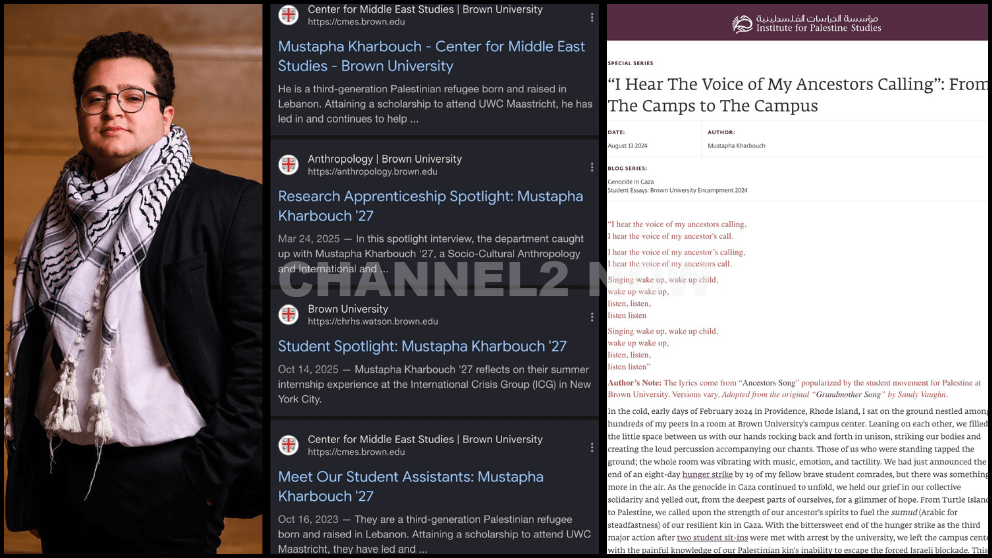
UPDATE: Statements have been released by the legal team representing Mustapha Kharbouch, a Brown University student who was falsely accused on social media of involvement in the recent mass shooting on campus.
Authorities have since identified the actual suspect, and there is no evidence linking Kharbouch to the attack.
In a formal press statement, Kharbouch’s attorneys said their client has been subjected to an intense and harmful online smear campaign following the shooting, which left two students dead and several others injured.
The legal team emphasized that Mustapha Kharbouch is a respected and exemplary member of the Brown University community, describing him as an exceptional student and an engaged global citizen.
They stated that, for more than a week, Kharbouch was targeted by a disturbing wave of racist, Islamophobic, and anti-Palestinian harassment, including efforts to falsely associate him with the tragedy solely because of his Palestinian identity.
According to the statement, these baseless allegations not only damaged Kharbouch’s reputation, but also risked diverting law enforcement attention from legitimate investigative leads at a critical time.
The legal team confirmed that, prior to the identification of the actual suspect, they fully cooperated with law enforcement, responding to inquiries regarding Kharbouch’s whereabouts on the day of the shooting.
The attorneys directly attributed the online attacks to anti-Palestinian racism, stating that bad-faith actors attempted to assign blame to Kharbouch based solely on his ethnicity and political advocacy.
They warned that such narratives do not merely harm one individual, but also serve to vilify Arab and Muslim communities more broadly and contribute to a dangerous climate of hate.
The statement referenced previous acts of violence fueled by similar rhetoric, including the killing of 6-year-old Wadea al-Fayoume in Chicago and the 2023 shooting of three Palestinian-American students in Vermont, one of whom was affiliated with Brown University.
Following the spread of misinformation by far-right online influencers, several Brown University webpages that referenced Kharbouch were temporarily removed.
His legal team said this was a standard safety precaution taken to protect individuals who have been doxxed and subjected to credible threats. They stressed that no one should be forced to endure harassment, death threats, or fear simply because of their identity.
Now that the suspect has been identified, the legal team expressed hope that Kharbouch—and the broader Brown University community—can begin to heal and grieve without further misinformation or harassment.
In a personal statement, Mustapha Kharbouch described the experience as deeply traumatic:
“The past few days have been an unimaginable nightmare. I woke up on Tuesday morning to unfounded, vile, Islamophobic, and anti-Palestinian accusations being directed toward me online. Instead of grieving with my community in the aftermath of the horrible shooting, I received non-stop death threats and hate speech.”
Kharbouch added that while his experience was painful, it reflects a broader pattern faced by marginalized communities:
“This is a story every Arab, Muslim, Palestinian, and marginalized person knows all too well. We should not live in a world where this is acceptable or normal.”
He reaffirmed his commitment to speaking out against racism and injustice, stating that he would not be silenced for his identity or his advocacy for Palestinians.
Kharbouch also expressed gratitude for the overwhelming support he has received from friends, faculty, staff, and strangers, saying those messages have helped restore his faith in a world that stands firmly against hate in all its forms.
Brown University has removed multiple online references to student activist Mustapha Kharbouch in the days following a deadly campus shooting, a move that has drawn public attention amid heightened online speculation—despite law enforcement officials confirming that no suspects or persons of interest have been identified in the investigation.
Archived versions of Brown University webpages show that Kharbouch, a first-year student at the time, was previously listed in several university-affiliated roles, including as a student assistant and Cultural Programming Coordinator connected to the Global Brown Center.
His academic interests were described as focusing on International and Public Affairs and Anthropology, with involvement in Middle East–focused academic, cultural, and student programming.
Those pages are no longer accessible, and Kharbouch’s social media accounts have also been deactivated.
A verified buyer from the United States with the name “Mustapha K.” reviewed a 9MM muzzle brake through the Wing Tactical website on December 29th, 2024 — the same caliber used in the Brown shooting.
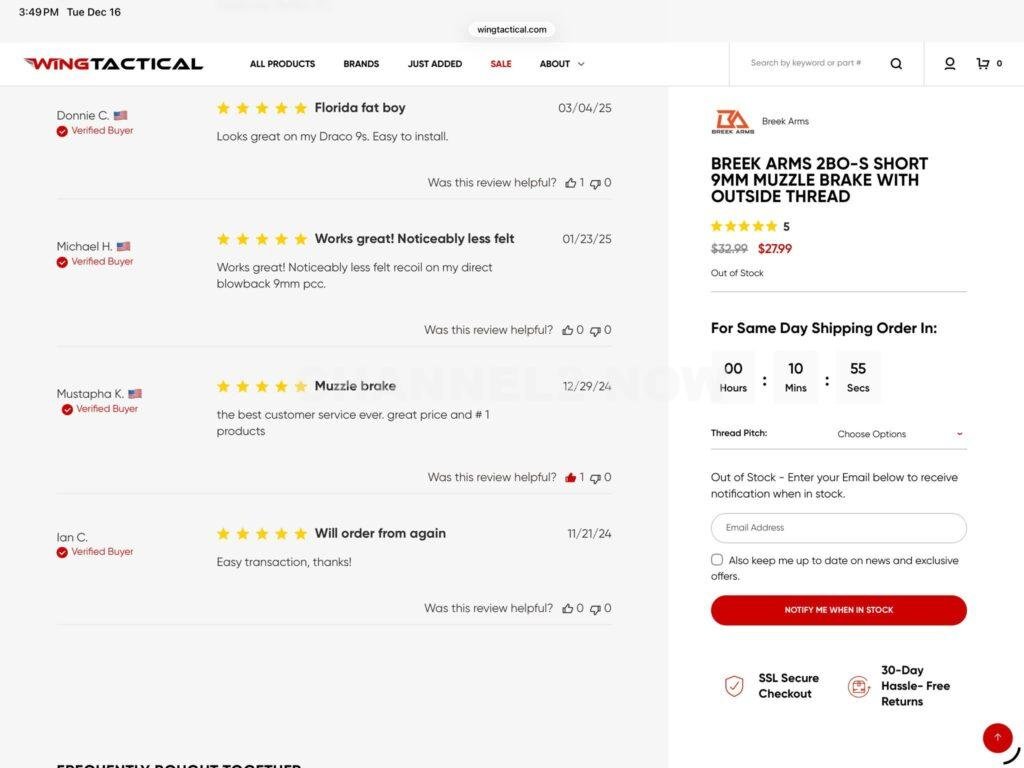
There are approximately a few hundred people in the entire United States with that first name + last initial combination.
University officials have not issued a public explanation for the removal of the online profiles.
The changes occurred as online speculation intensified in the immediate aftermath of the shooting, with social media users circulating screenshots of archived university pages and past writings associated with Kharbouch.
Among the materials resurfaced by online users was a 2024 essay authored by Kharbouch and published by the Institute for Palestine Studies as part of a special student essay series titled Genocide in Gaza: Student Essays — Brown University Encampment 2024.
The essay, titled “I Hear the Voice of My Ancestors Calling: From the Camps to the Campus,” was published on August 13, 2024, months before the shooting. The piece is a first-person reflective essay examining Palestinian identity, intergenerational memory, student activism, and questions of hope amid displacement, war, and protest.
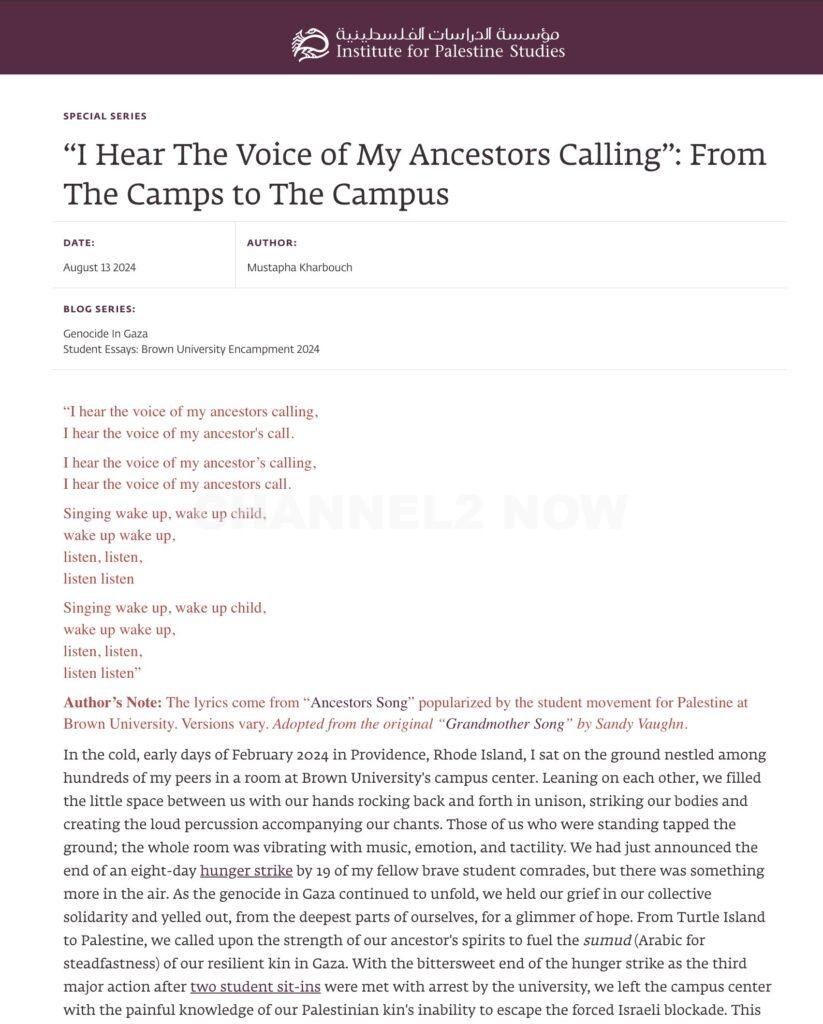
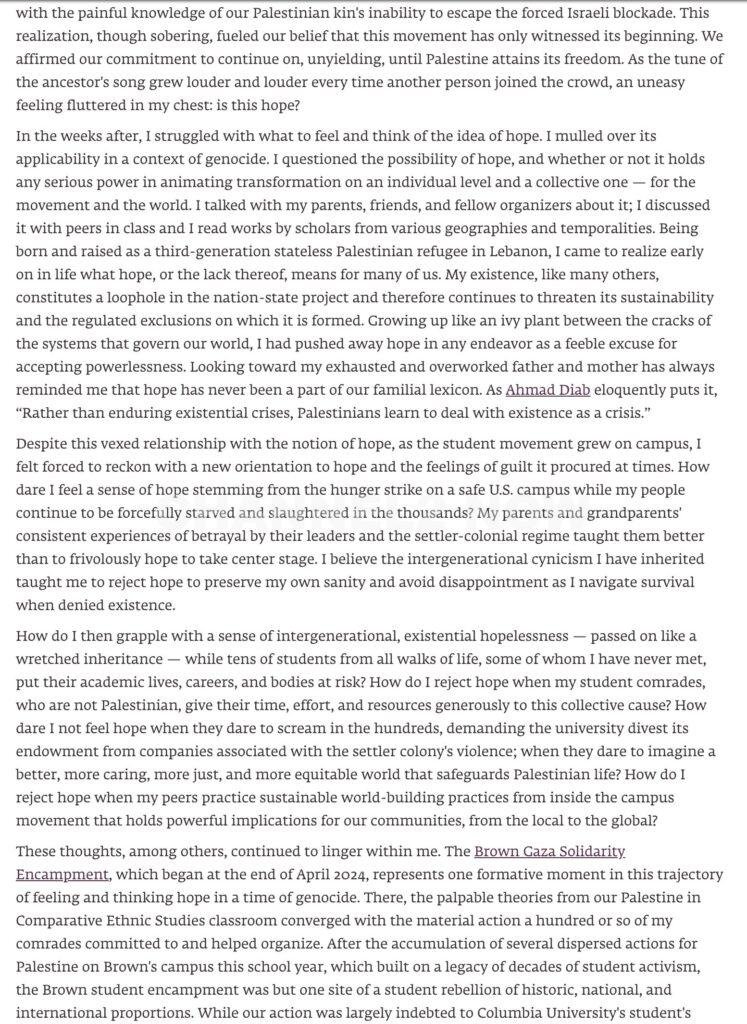
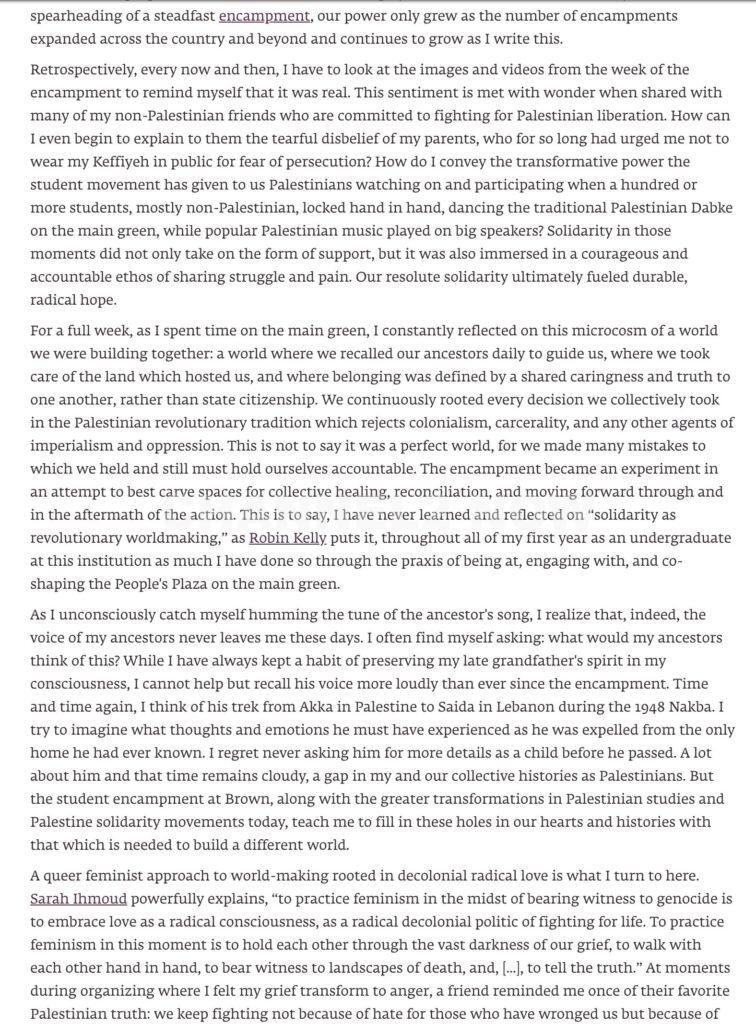
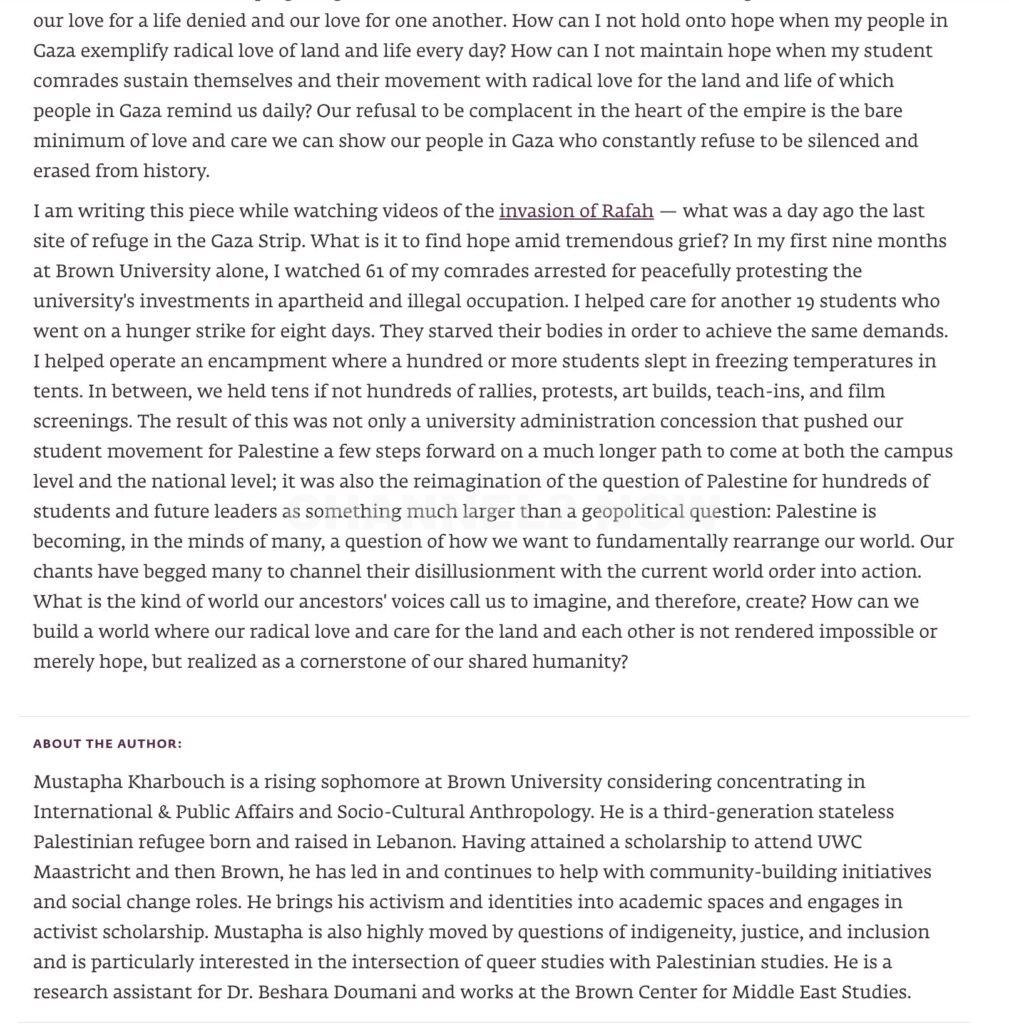
The article includes poetic excerpts adapted from “Ancestors Song,” a chant popularized during student-led Palestine solidarity actions at Brown University, and documents Kharbouch’s participation in campus organizing efforts, including sit-ins, hunger strikes, rallies, and the Brown Gaza Solidarity Encampment.
The essay situates these experiences within a broader discussion of decolonial thought, feminist theory, and Palestinian history, including reflections on the 1948 Nakba and the author’s family history as a third-generation stateless Palestinian refugee raised in Lebanon.
The content of the essay is ideological, autobiographical, and academic in nature.
There is no reference to violence on campus, nor any indication of intent or planning related to criminal activity.
The Institute for Palestine Studies has not issued any statement suggesting the piece is under review or connected to the shooting.
Despite widespread online conjecture, law enforcement agencies, including the FBI and Providence Police, have not named Mustapha Kharbouch as a suspect or person of interest, and have publicly stated that there is no evidence linking him to the shooting.
Investigators have emphasized that the case remains active and that conclusions are being guided strictly by verified evidence.
Authorities have cautioned against drawing inferences from online speculation, warning that unsubstantiated claims can compromise investigations and cause undue harm to individuals not implicated by facts.
Media analysts and campus observers have suggested that Brown University’s decision to remove online references may have been taken as a protective or precautionary measure, particularly as misinformation and harassment proliferated across social media platforms following the attack.
Similar actions have been taken by institutions in other high-profile incidents to limit doxxing, targeted harassment, or the misinterpretation of publicly available biographical information during periods of heightened tension.
Brown University has not confirmed whether the removals were temporary, administrative, or safety-related in nature.
Authorities continue to urge the public to rely on confirmed information released by law enforcement and to avoid amplifying unverified narratives.
As of the most recent update, no arrests have been announced, no individuals have been publicly identified as suspects, and the investigation remains ongoing.
Anyone with credible information related to the shooting has been asked to contact investigators directly.







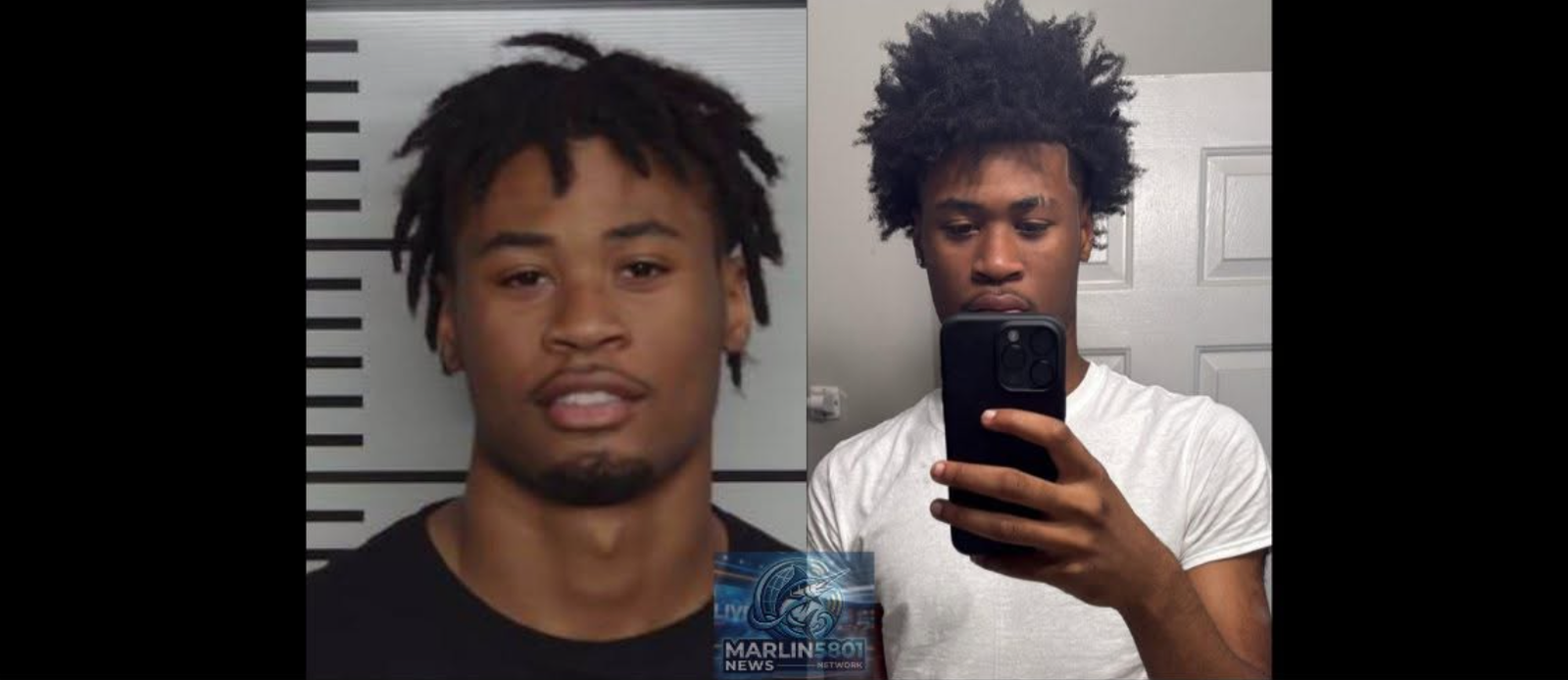
LOUISVILLE, Ky. — A woman died after being shot in Louisville’s Parkland neighborhood early Saturday morning. Police arrested 19-year-old Tyrone Reed and charged him in connection with the fatal shooting.
Louisville Metro Police Department officers responded to a reported shooting shortly after 5 a.m. Saturday in the 2600 block of Greenwood Avenue.
When officers arrived, they found a woman suffering from a gunshot wound. Emergency responders transported her to UofL Hospital for treatment. However, she later died from her injuries.
Police have not publicly identified the woman. Authorities also have not released further details about the events leading up to the shooting.
Police identified Tyrone Reed, 19, as the suspect arrested in connection with the incident. He faces charges of murder and wanton endangerment.
Investigators have not disclosed additional information about the circumstances surrounding the shooting. The case remains under investigation as authorities work to establish what happened.
Officials have not released further details about the victim or the events that led to her death.