
Crime
Former Mercy Physician Fatally Shot by St. Louis County Police During Warrant Service in Fenton


Fenton, MO – A former physician at Mercy Health was shot and killed by St. Louis County police officers on Friday morning after an attempted arrest escalated into a fatal confrontation.
The deceased, identified as 38-year-old Aleksandr Lanis, was the subject of an arrest warrant for first-degree harassment.
Officers arrived at approximately 10 a.m. at a residence in the 1000 block of Hawkins Bend Drive to serve the warrant when the situation turned violent.
According to police, officers made contact with Lanis at the door of the home, where a verbal exchange ensued.
The encounter quickly escalated into a physical struggle when Lanis allegedly brandished a firearm.
In response, both officers discharged their weapons, striking and fatally wounding him. A firearm was recovered at the scene.
One of the officers sustained a non-gunfire-related hand injury during the altercation but was treated at the scene and did not require hospitalization.
The officers involved in the shooting have been identified as a 30-year-old with seven years of service and a 22-year-old who has been with the department for one year.
Neighbors in the area expressed shock following the incident. “We heard about 15 shots,” one resident recalled. “I didn’t even know he had weapons. He mostly kept to himself.”
Authorities confirmed that Lanis shared the home with a woman who was in the process of divorcing him.
She and their young child were not present at the time of the shooting.
Mercy Health acknowledged that Lanis had previously been employed as a physician but declined to disclose the timeframe of his tenure with the organization.
The investigation into the officer-involved shooting is ongoing.








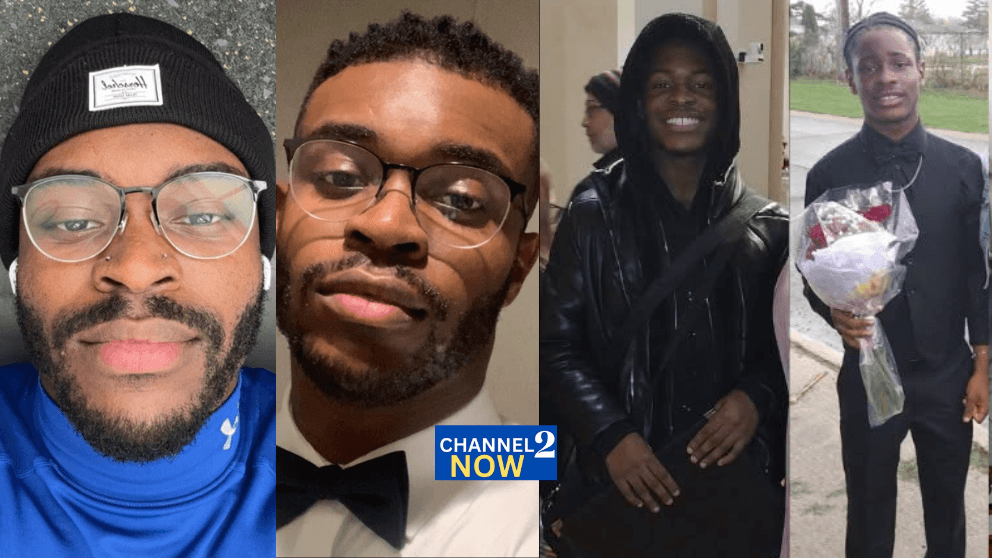
MONROE TOWNSHIP, Mich. — A 27-year-old Monroe Township man has been charged in connection with the death of 15-year-old Trenton Grant and the serious injuries suffered by the teenager’s mother and stepfather following a violent stabbing incident in Monroe Township, Michigan.
Tyson Alexander Grant faces six criminal charges stemming from an incident reported during the early morning hours of Saturday, October 17, in the 1200 block of Raintree Boulevard, according to Monroe County Prosecuting Attorney Jeffery A. Yorkey.
The charges include open murder, two counts of assault with intent to murder, two counts of carjacking, and one count of assaulting, resisting or obstructing a police officer or other first responder.
According to the prosecutor’s office, each of the first five charges carries a maximum possible penalty of life in prison. The charge of assaulting, resisting or obstructing a police officer or first responder carries a maximum penalty of two years in prison and/or a $2,000 fine.
Authorities were dispatched to the Raintree Boulevard area on October 17 after receiving a report of a stabbing.
Upon arriving at the scene, deputies discovered multiple people suffering from lacerations and stab wounds. They also found the body of 15-year-old Trenton Grant.
Several people were transported to a hospital for treatment. Investigators subsequently began treating the teenager’s death as a homicide.
The incident prompted a criminal investigation into the circumstances surrounding the fatal stabbing and the injuries sustained by the other victims.
Prosecutors have not publicly disclosed the nature of the relationship, if any, between Tyson Alexander Grant and the victims.
According to the Monroe County Prosecuting Attorney’s Office, Tyson Alexander Grant is currently hospitalized in Lucas County, Ohio, with injuries stemming from the incident.
Prosecutors intend to seek his extradition to Monroe County after he is discharged from the hospital so the criminal proceedings can move forward.
As of the latest information provided by prosecutors, a date for Grant’s initial court appearance has not been scheduled.
The six charges reflect the allegations filed against Grant. The case remains subject to the judicial process, and the allegations have not yet been proven in court.
Authorities have not provided additional details about the events leading up to the stabbing or the circumstances surrounding the suspect’s injuries.
The investigation and court proceedings are expected to provide further information as the case develops.