
World
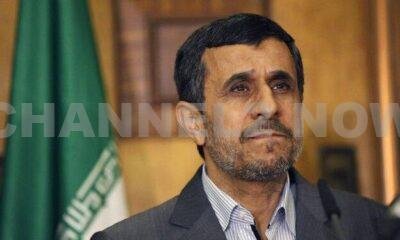
IRAN CONFIRMS SUPREME LEADER ALI KHAMENEI KILLED IN AIRSTRIKE

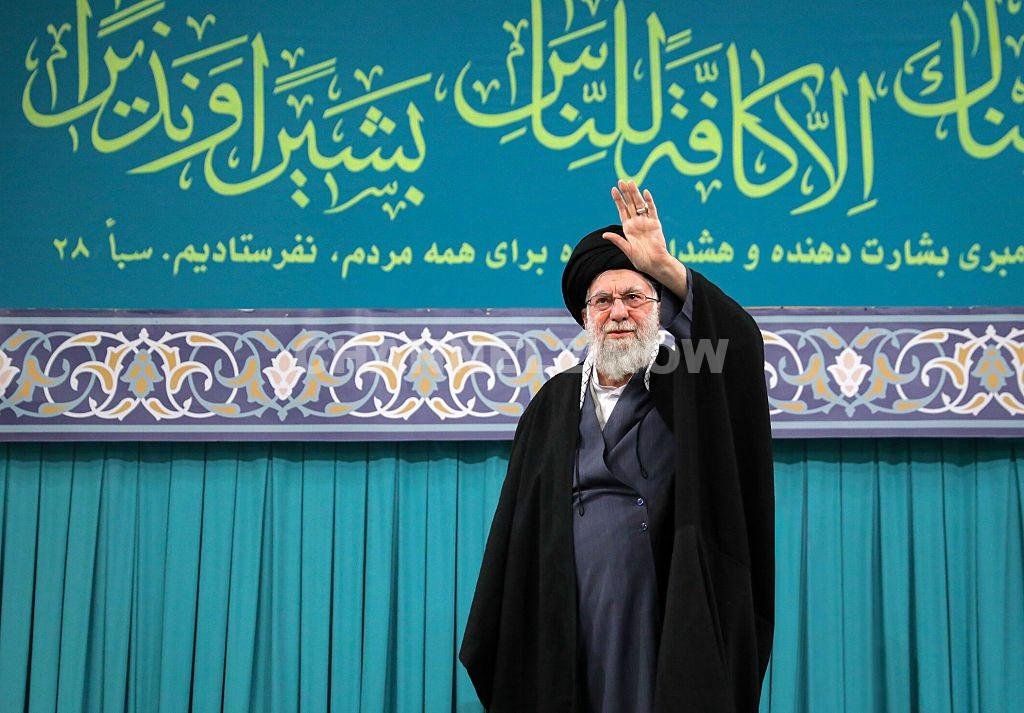
Iranian authorities have confirmed that Supreme Leader Ali Khamenei was killed in an airstrike, marking a historic and destabilizing moment for the region.
The Iranian government has declared 40 days of national mourning following his death.
State media reported that senior leadership convened in emergency session following confirmation of the strike.
Details regarding the exact location and timing of the airstrike have not yet been officially disclosed.
In a public statement, Iran’s Islamic Revolutionary Guard Corps vowed what it described as “severe” and “decisive” punishment against both the United States and Israel, holding them responsible for Khamenei’s death.
Officials characterized the airstrike as an act of aggression and warned of significant retaliation.
The statement did not outline specific measures but indicated that Iran’s response would be forthcoming.
The United States Central Command (CENTCOM) released a brief statement saying, “The Iranian regime was warned. CENTCOM is now delivering swift and decisive action as directed.”
U.S. officials have not publicly elaborated on operational details or the scope of ongoing military activity in the region.
The development has intensified geopolitical tensions across the Middle East. Reports indicate that Israeli and Saudi leaders had urged stronger U.S. action against Iran in recent weeks. Sources familiar with diplomatic discussions claim that Mohammed bin Salman, the Crown Prince of Saudi Arabia, made multiple communications to U.S. leadership advocating for military action.
U.S. President Donald Trump was reportedly engaged in discussions regarding policy decisions related to Iran during this period, though the extent of direct involvement remains unclear.
Iranian state broadcaster Press TV aired emotional coverage following the announcement. One anchor was visibly overcome with emotion during a live broadcast upon learning of Khamenei’s death, reflecting the profound domestic impact of the event.
Khamenei, who had served as Iran’s Supreme Leader since 1989, was the country’s highest political and religious authority. His death leaves significant uncertainty regarding succession and the future direction of Iran’s domestic and foreign policy.
International leaders are closely monitoring developments amid concerns about potential military escalation and broader regional instability. Further statements from Tehran, Washington, and regional governments are expected as the situation continues to unfold.








Crime
Video Shows Gunman Nael Jalani Shooting Inside Ateneo de Zamboanga University campus in Barangay Tumaga, Zamboanga City
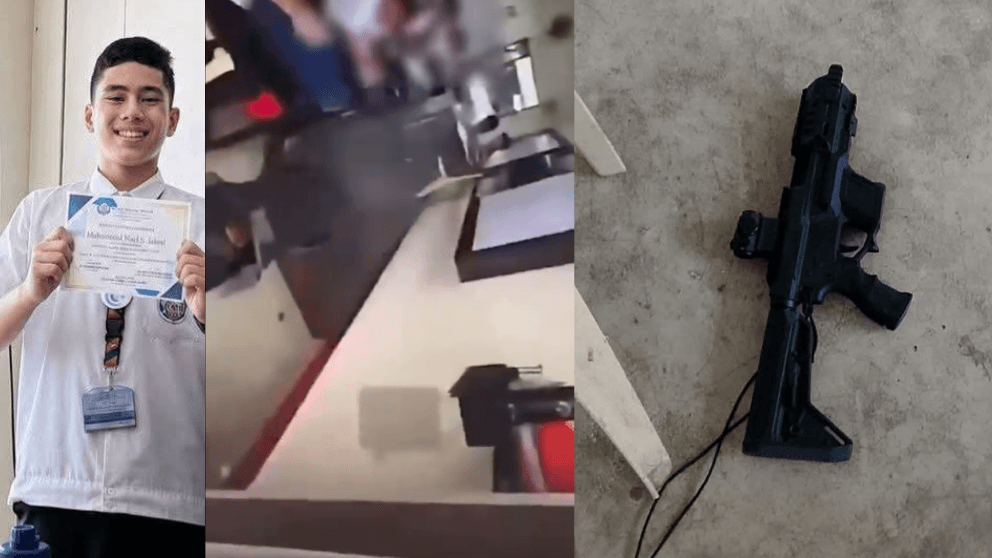
ZAMBOANGA CITY, Philippines — Two students were reportedly injured in an alleged shooting at a private university high school campus in Zamboanga City on Tuesday morning, prompting a major police response and an investigation into how a firearm entered the school premises.
According to initial reports, a student allegedly opened fire inside the university’s high school campus. The incident caused panic among students and staff as authorities responded to the scene.
Local reports also indicated that the suspect livestreamed the shooting on social media, including through Facebook. Some local media outlets have identified the alleged gunman as Nael Jalani, although police have not yet independently confirmed the suspect’s identity.
Police officials said two students were victims of the shooting, but their current medical conditions were still being determined as authorities continued their investigation.
Police Regional Office 9 spokesperson Police Major Shellamie Chang said investigators were working to establish the identity of the suspect and determine how the firearm was brought onto the university campus.
Authorities have not yet released comprehensive details about the circumstances leading up to the shooting, including the suspect’s motive or whether the victims were specifically targeted.
Reports indicate that the alleged shooter broadcast portions of the incident through a social media livestream.
The livestream reportedly showed the shooting unfolding inside the university high school campus. Authorities are expected to examine the social media material as part of the investigation and to establish a detailed timeline of the incident.
Some reports have also circulated claims that multiple people may have been killed, but those reports had not been fully confirmed by authorities at the time of the initial information.
The Police Regional Office 9 is investigating the circumstances surrounding the shooting, including how the firearm was brought into the private university.
Investigators are expected to interview witnesses and examine available surveillance footage and social media evidence as they work to determine what happened.
Authorities have not yet released a confirmed motive for the shooting.
The investigation remains ongoing, and officials are expected to provide additional information regarding the victims’ conditions, the suspect’s identity and any potential charges as more facts become available.