
Crime
Three Men Arrested in Connection with Abduction of 7-Year-Old Jamal White in Milwaukee


MILWAUKEE, WI – Milwaukee Police have arrested three men at two separate locations linked to the abduction of 7-year-old Jamal White, who was taken at gunpoint on Friday, July 11, by a masked suspect outside his home on the city’s northwest side.
Jamal was found safe nearly 24 hours later on Saturday evening, July 12, approximately six and a half miles away from where he was abducted.
According to arrest records made public Sunday, the arrests were carried out at both the location where Jamal was found and the home from which he was taken.
One of the suspects, 25-year-old Corey Williams, was arrested at a residence in the 2000 block of North 39th Street, where Jamal was located. Williams was taken into custody at 5:45 p.m. on July 12 and is currently being held for a probation violation, police confirmed.
Additionally, two 27-year-old men were arrested at the home on West Hustis Street, the site of the abduction.
One individual was booked on tentative charges of resisting and obstructing an officer, while the second is being held on a tentative charge of second-degree recklessly endangering safety.
Jamal White Jr.’s uncle, Jamel White — the twin brother of the child’s father — has been arrested and booked in Milwaukee County, Wisconsin.
According to official records, Jamel White is currently in custody on pending charges.
Authorities have not yet released specific details regarding the nature of the charges or how they may be connected to the abduction case.
Police have not provided further details on the arrests or whether additional suspects are being sought. As of Sunday, formal charges had not been publicly confirmed.
Jamal D. White Sr., the father of 7-year-old Jamal White Jr., took to social media to express frustration over how he has been treated during the investigation.
“Y’all are foul for spreading these false narratives,” White wrote. “Even the police are treating me like I’m the bad guy. All that’s ever mattered to me is my son being okay.”
White said he spent all of Saturday in police custody being questioned, despite fully cooperating and sharing everything he knew at the time.
“I still haven’t even seen my son face-to-face,” he added. “They had me locked up all day while my child was still missing.”
He concluded by affirming his focus remains solely on his son, writing, “I don’t owe anybody anything—only my baby Jamal.”
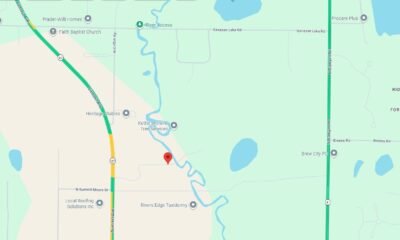
Jamal was reportedly taken at gunpoint by an unidentified man wearing a black face mask and forced into a white Jeep Renegade outside his home in the 6200 block of West Hustis Street.
The abduction prompted an urgent search that concluded with the boy being found safe near 39th and Lloyd.
“Jamal has been located and is safe,” Milwaukee Police announced in a statement at 6:36 p.m. on July 12. “The Milwaukee Police Department would like to thank everyone for their assistance in this matter.”
The case remains under investigation.
Authorities have not disclosed a motive or the relationship, if any, between the suspects and the child.










Crime
Who Is the Hero Teacher, Threw a Phone at Gunman John J. Griffin II, Tackled Him, and Fought Back During the Silver Rail Elementary School Shooting?
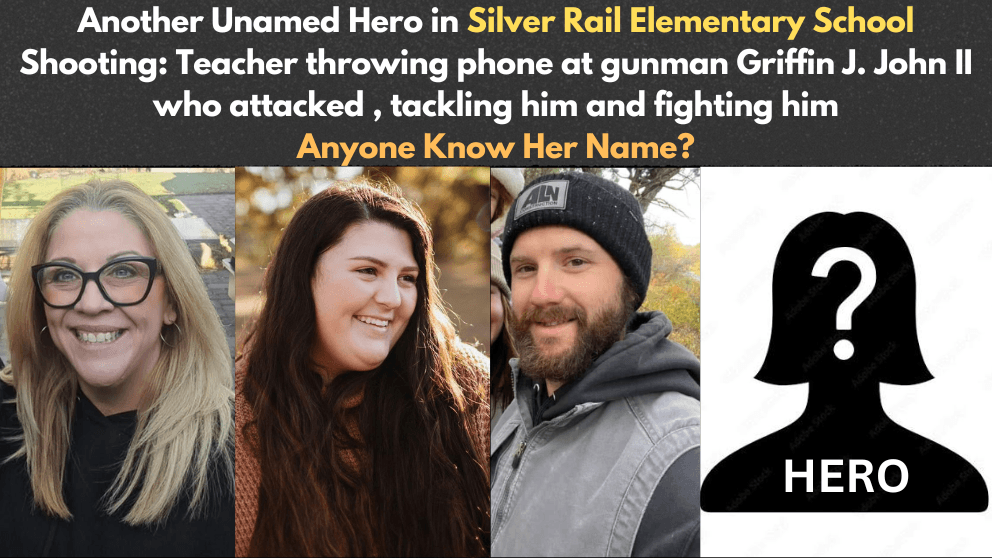
Another Unamed Hero in Silver Rail Elementary School Shooting: Teacher throwing phone at gunman Griffin J. John II who attacked , tackling him and fighting him.
Anyone Know Her Name? She Must Be Praised Just Like Kaylub Giamanco
BEND, Oregon — Becky Drury, a 54-year-old teacher at Silver Rail Elementary School in Bend, Oregon, sustained serious injuries during the deadly school shooting on Thursday, October 15, 2026. Drury suffered gunshot wounds to her left arm and right hand and underwent surgery, according to the information shared about the incident.
As Drury begins what could be a lengthy recovery, new details have also emerged about the reported actions of another teacher who allegedly confronted the gunman during the attack. According to the account attributed to Bend Police Chief Mike Krantz during a press conference, the unidentified teacher threw a phone at the suspect, tackled him, and fought back.
The teacher reportedly escaped the confrontation without physical injuries. Officials were said to have clarified that earlier information suggesting the teacher had been injured was incorrect.
Drury was among those injured in the shooting at Silver Rail Elementary School. She sustained injuries to her left arm and right hand and required surgery.
Although the injuries were described as serious, the information provided indicates that she survived the operation. Her recovery may involve additional medical treatment, rehabilitation, and emotional support as she works to recover from the traumatic experience.
Her family, colleagues, students, and community members are hoping for her continued improvement and a successful recovery.
The shooting has left the school community dealing with grief, fear, and uncertainty. For those injured, the challenges extend beyond immediate medical care, as they and their loved ones face the psychological and emotional consequences of the violence.
Additional details attributed to Bend Police Chief Mike Krantz describe the actions of another Silver Rail Elementary School teacher who reportedly confronted the gunman during the attack.
According to the account provided, the unidentified teacher threw a phone at the suspect, tackled him, and physically fought back. The teacher was reportedly not injured, contrary to earlier information about the confrontation.
The teacher’s reported actions have drawn attention because confronting an armed attacker can involve extraordinary personal risk. However, the precise sequence of events and the extent to which the confrontation affected the outcome should be established through official statements and investigative findings.
The teacher’s identity has not been provided in the supplied information. Protecting that person’s privacy may be particularly important while the school community and those directly involved continue to process the incident.
The supplied account also identifies Kaylub Giamanco as the person who reportedly shot and killed the suspect during the incident.
The suspect has been identified in earlier reports as John J. Griffin II, a 16-year-old. However, the exact spelling and order of the suspect’s name should be confirmed against official law enforcement records before publication.
The reported intervention by Giamanco and the actions attributed to the unidentified teacher are separate aspects of the developing account. Their precise roles and the circumstances surrounding the suspect’s death should be described using verified statements from investigators.
As Becky Drury faces recovery, messages of support and prayers are being shared for her and everyone affected by the shooting.
Teachers and school staff often play a central role in supporting children, particularly during frightening and uncertain situations. The reported actions of Drury’s colleague have prompted expressions of appreciation, although the full circumstances should be confirmed before drawing definitive conclusions about what happened.
The emotional impact of a school shooting can continue long after the immediate danger has passed. Survivors, families, students, educators, and first responders may need access to counseling, mental health resources, and other forms of assistance.
Community support may also help families and injured staff members manage medical costs, time away from work, and other practical challenges during recovery.
The Silver Rail Elementary School shooting has left the Bend community confronting profound loss and uncertainty. As families mourn those who died, attention is also turning to the survivors who must navigate the difficult process of healing.
Becky Drury’s recovery remains an important concern for her loved ones and colleagues. The unidentified teacher who reportedly confronted the gunman may also need emotional support after experiencing such a traumatic event, even without physical injuries.
Prayers and support are being extended to Becky Drury, her family, the teacher who reportedly intervened, and every student, family, and staff member affected by the tragedy.