
Crime
Former U.S. Army officer Adam Coste injured in New Orleans car-ramming attack
He is currently receiving treatment at a local New Orleans hospital, where his medical team is working diligently to aid his recovery.

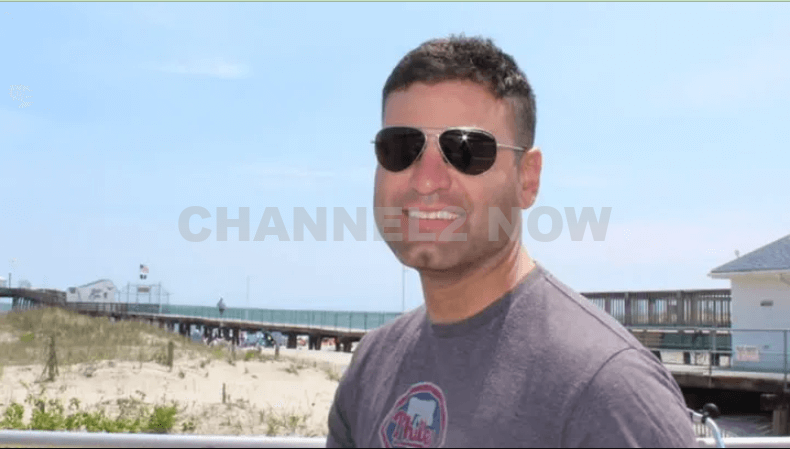
New Orleans, LA – Among the many victims of the tragic New Year’s Day terrorist attack on Bourbon Street, Adam Coste is being recognized not only for his courageous past but also for his enduring strength in the face of devastating injuries.
Coste, a former U.S. Army officer, sustained severe injuries to his lower extremities after being struck by the suspect’s vehicle during the violent attack.
He is currently receiving treatment at a local New Orleans hospital, where his medical team is working diligently to aid his recovery.
Adam Coste exemplifies the qualities of a true hero and friend. Known for his kindness, generosity, and selflessness, he is a person others naturally turn to in times of need.
A military history enthusiast and decorated officer, Coste served in the United States Army for over a decade, undertaking multiple deployments with courage and unwavering dedication to his country.
Those close to him describe Adam as the friend everyone wishes to have. He has consistently been a source of support and strength for others, always willing to lend a helping hand, often without being asked.
In the wake of this senseless act of violence, friends and family of Adam are stepping up to offer their support. While Adam is not one to ask for help, those who know him recognize the importance of coming together to assist him during this challenging time.
The Bourbon Street attack has left a deep scar on the New Orleans community, with many victims and their families grappling with its impact. Amid this tragedy, Adam Coste’s story serves as a reminder of resilience, sacrifice, and the enduring spirit of those who dedicate their lives to serving others.
Community members and supporters are encouraged to keep Adam and all the victims of this horrific attack in their thoughts and prayers. For those who wish to extend their assistance, local organizations are mobilizing to provide aid to the victims and their families.
Adam’s journey toward recovery will undoubtedly be a testament to his unyielding strength and the support of those who stand by him. As New Orleans mourns and heals, his story highlights the humanity and compassion that unite communities in times of adversity.










Crime
5 dead including 3 children in Silver Rail Elementary shooting in Bend, teenage shooter killed by a Good Samaritan
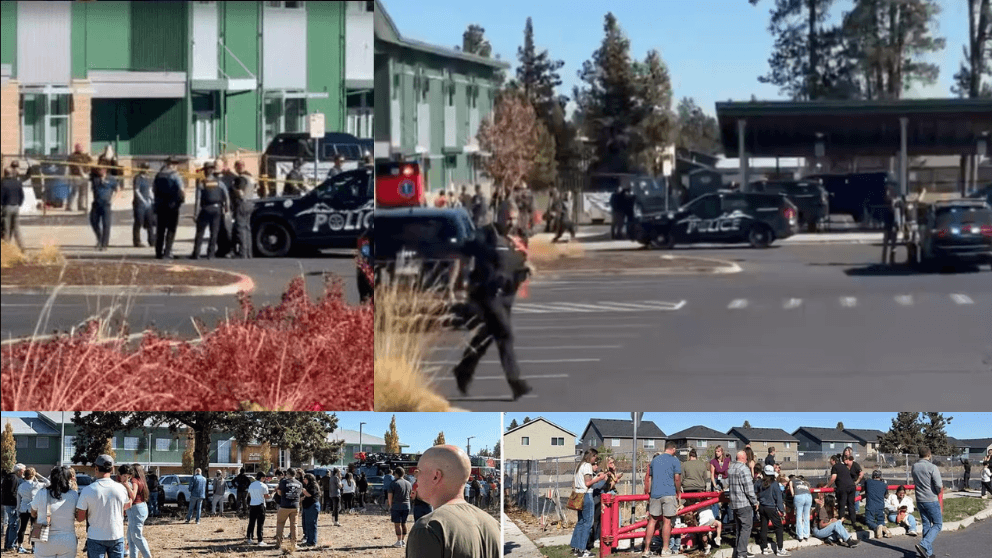
BEND, Ore. — Five people were reportedly killed in a shooting at Silver Rail Elementary School in southeast Bend, Oregon, on Thursday, October 15, 2026, including three children, one adult victim, and the teenage suspect, according to preliminary information attributed to federal law enforcement.
The reported shooting prompted a major emergency response involving police, fire crews, and emergency medical services.
Authorities issued an alert at approximately 1:17 p.m., warning of a large police presence at the elementary school and urging the public to avoid the area.
According to the information provided, four victims were killed at the school. Three of those victims were children, while the fourth was an adult. The suspected gunman, described in preliminary reports as a teenager, was also reported dead, bringing the reported total to five fatalities.
The circumstances surrounding the shooting, including the identities of the victims and the suspect, had not been fully established in the information available.
Preliminary reports indicated that the suspected gunman was a teenager and was killed after being confronted by a Good Samaritan.
Earlier scanner traffic reportedly indicated that the suspect had been neutralized. Unconfirmed reports suggested that the individual who intervened may have been a father of a student at the school.
However, authorities had not publicly confirmed all the circumstances surrounding the confrontation or independently verified the reported identity and role of the person who intervened.
Investigators are expected to examine the sequence of events leading up to the shooting, how the suspect was stopped, and whether the suspect acted alone.
The first police alert was issued at approximately 1:17 p.m. Thursday. It described a large police presence at Silver Rail Elementary School and instructed the public to stay away from the area.
Fire and emergency medical services personnel were seen responding near the school as authorities worked to address the reported threat and assist those affected.
The shooting prompted urgent concern among families and the surrounding community, particularly after reports indicated that children were among the victims.
Approximately 10 minutes after the initial alert, police announced a reunification site for students and their families at Journey Church, located at 61303 S. Highway 97 in Bend, near Goodwill and Dairy Queen.
Parents and guardians were instructed to go to the designated location to reunite with students and receive further information.
Authorities urged families to follow official instructions and avoid approaching the school while emergency operations continued.
The reported shooting also prompted precautionary security measures at nearby schools. Parents received alerts indicating that Caldera High School and Jewell Elementary School had been placed on lockdown Thursday afternoon.
The lockdowns were reported as law enforcement responded to Silver Rail Elementary and worked to secure the surrounding area.
Further information was needed to establish how long the lockdowns remained in effect and when normal school operations resumed.
Although preliminary information indicated five deaths, including three children, one adult victim, and the teenage suspect, additional official confirmation is needed regarding the victims’ identities, the suspect’s identity, and the circumstances of the shooting.
The reported involvement of a Good Samaritan also requires confirmation from investigators.
This remains a developing story. Further details should be added as law enforcement and school officials release verified information about the shooting and the investigation.