
Crime
Video shows moments New York Jets cornerback Kris Boyd shot outside Midtown Manhattan nightclub


New York Jets cornerback Kris Boyd is reportedly improving after being critically injured in a shooting outside a well-known Manhattan venue early Sunday morning.
According to one of his closest friends, Boyd is now in “good condition” as he continues to recover in the hospital.
Ernest Quander, who has known Boyd since his college football days at the University of Texas, shared a reassuring update.
“He’s all good right now. He’s in good condition. He’s doing real good,” Quander said. “He’s a soldier, through tough times… He’s fine. He’s fine.”
Boyd, 29, was shot twice in the abdomen near a restaurant on West 38th Street just after 2 a.m., according to the NYPD.
Witnesses reported that two luxury vehicles — one believed to be connected to the gunman — fled the scene immediately after shots were fired.
Boyd was transported to Bellevue Hospital, where he arrived in critical but stable condition and was reportedly drifting in and out of consciousness.
No formal medical update has been released by authorities or the team since the initial report.
Quander told media he is traveling to New York to be with Boyd, noting that although the two are close in age, he has long served as a mentor and “father figure” to the defensive back, especially throughout Boyd’s transition to the National Football League.
The Jets organization acknowledged awareness of the shooting, issuing a brief statement:
“We are aware of the situation involving Kris Boyd and will have no further comment at this time.”
Boyd, currently on injured reserve due to a shoulder injury sustained in practice, has not appeared in a game this season.
He joined the Jets in March after previously playing for the Minnesota Vikings, Arizona Cardinals, and Houston Texans following his selection in the 2019 NFL Draft.
No arrests have been announced, and police have not publicly confirmed a motive as the investigation remains ongoing.










Crime
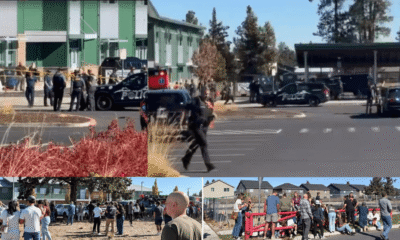
5 dead including 3 children in Silver Rail Elementary shooting in Bend, teenage shooter killed by a Good Samaritan
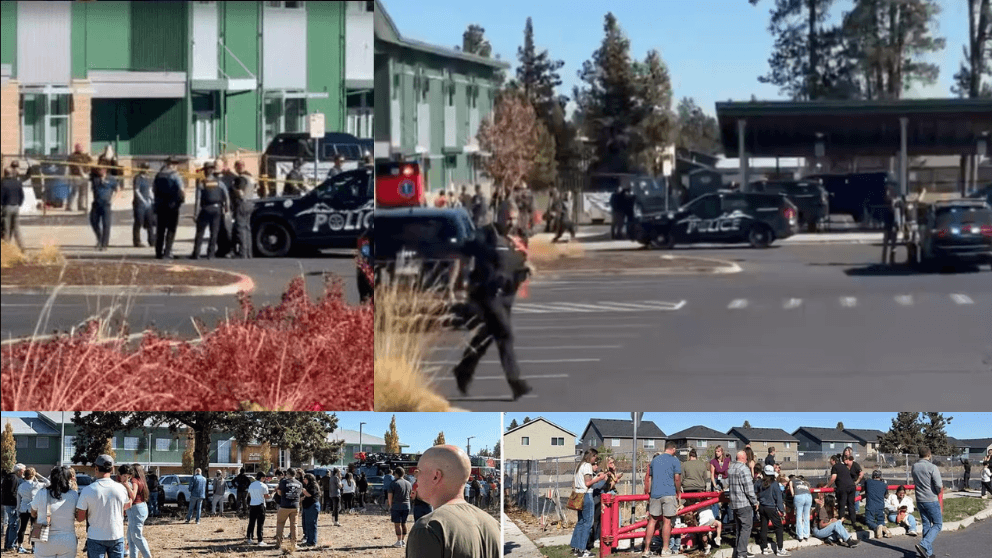
BEND, Ore. — Five people were reportedly killed in a shooting at Silver Rail Elementary School in southeast Bend, Oregon, on Thursday, October 15, 2026, including three children, one adult victim, and the teenage suspect, according to preliminary information attributed to federal law enforcement.
The reported shooting prompted a major emergency response involving police, fire crews, and emergency medical services.
Authorities issued an alert at approximately 1:17 p.m., warning of a large police presence at the elementary school and urging the public to avoid the area.
According to the information provided, four victims were killed at the school. Three of those victims were children, while the fourth was an adult. The suspected gunman, described in preliminary reports as a teenager, was also reported dead, bringing the reported total to five fatalities.
The circumstances surrounding the shooting, including the identities of the victims and the suspect, had not been fully established in the information available.
Preliminary reports indicated that the suspected gunman was a teenager and was killed after being confronted by a Good Samaritan.
Earlier scanner traffic reportedly indicated that the suspect had been neutralized. Unconfirmed reports suggested that the individual who intervened may have been a father of a student at the school.
However, authorities had not publicly confirmed all the circumstances surrounding the confrontation or independently verified the reported identity and role of the person who intervened.
Investigators are expected to examine the sequence of events leading up to the shooting, how the suspect was stopped, and whether the suspect acted alone.
The first police alert was issued at approximately 1:17 p.m. Thursday. It described a large police presence at Silver Rail Elementary School and instructed the public to stay away from the area.
Fire and emergency medical services personnel were seen responding near the school as authorities worked to address the reported threat and assist those affected.
The shooting prompted urgent concern among families and the surrounding community, particularly after reports indicated that children were among the victims.
Approximately 10 minutes after the initial alert, police announced a reunification site for students and their families at Journey Church, located at 61303 S. Highway 97 in Bend, near Goodwill and Dairy Queen.
Parents and guardians were instructed to go to the designated location to reunite with students and receive further information.
Authorities urged families to follow official instructions and avoid approaching the school while emergency operations continued.
The reported shooting also prompted precautionary security measures at nearby schools. Parents received alerts indicating that Caldera High School and Jewell Elementary School had been placed on lockdown Thursday afternoon.
The lockdowns were reported as law enforcement responded to Silver Rail Elementary and worked to secure the surrounding area.
Further information was needed to establish how long the lockdowns remained in effect and when normal school operations resumed.
Although preliminary information indicated five deaths, including three children, one adult victim, and the teenage suspect, additional official confirmation is needed regarding the victims’ identities, the suspect’s identity, and the circumstances of the shooting.
The reported involvement of a Good Samaritan also requires confirmation from investigators.
This remains a developing story. Further details should be added as law enforcement and school officials release verified information about the shooting and the investigation.